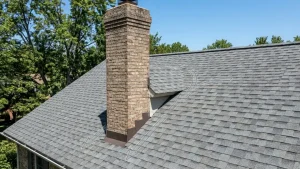
In Maryland, wind-driven rain and heavy storms can push water sideways and upward. Roof-to-wall areas and chimneys are some of the most common leak points because they’re a transition in the roof. Proper step flashing and counter flashing create a “shingle-style” water path that sheds water safely instead of relying on caulk.

WHAT IS THE DIFFERENCE BETWEEN STEP FLASHING AND COUNTER FLASHING?
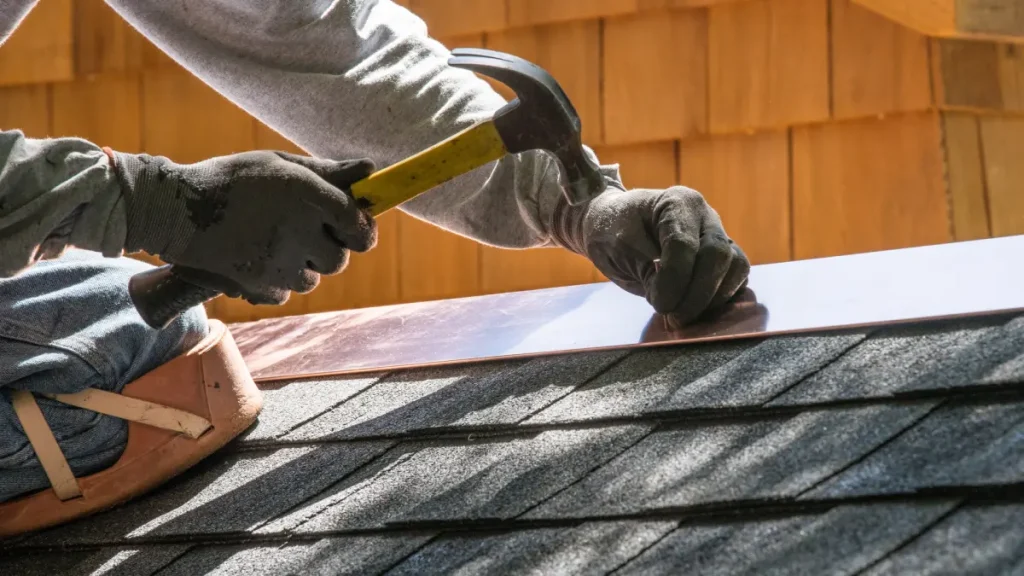
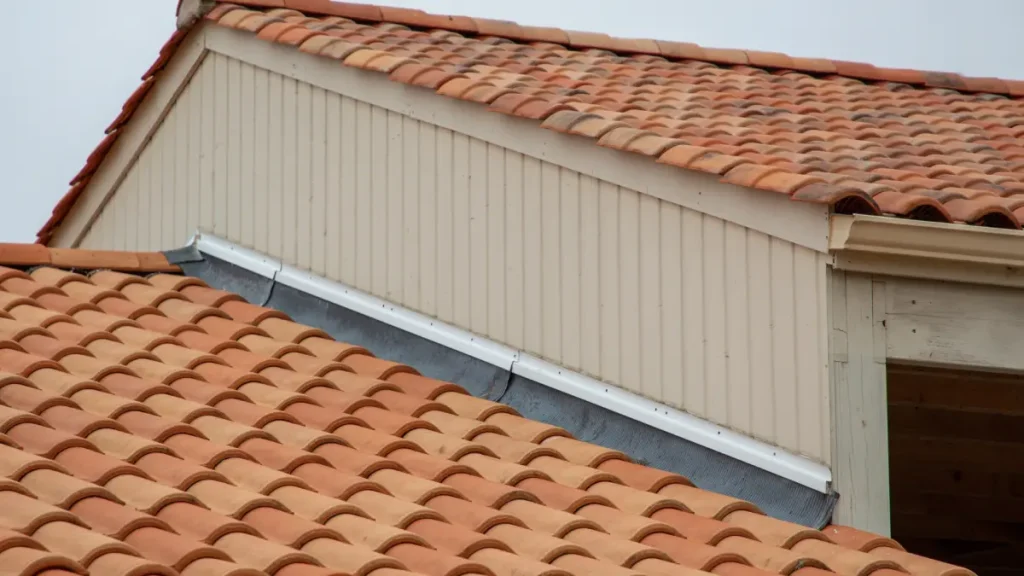
- Step flashing is a series of small, L-shaped metal pieces layered with shingles along a wall-to-roof intersection.
- Counter flashing is the second layer that covers the top edge of step flashing (often attached to the wall or chimney) to block water from getting behind it.
In most cases, you need both for a long-lasting, leak-resistant roof-to-wall detail.
What is step flashing?
Step flashing is installed where a sloped roof meets a vertical wall (like a dormer wall, sidewall, or the wall of a second story). It’s made of multiple pieces—each piece overlaps the one below it, and each piece is woven with a shingle course.
What step flashing does
- Directs water away from the wall-to-roof seam
- Prevents water from getting under shingles at the sidewall
- Creates a layered drainage path that still works even as materials expand/contract
What is counter flashing?
Counter flashing is installed over step flashing to protect the top edge and keep water from getting behind it. Counter flashing is common at:
- Chimneys (often cut into mortar joints as “reglet” flashing)
- Masonry walls
- Stucco or siding transitions (depending on the wall system)
What counter flashing does
- Covers and protects the upper edge of step flashing
- Blocks wind-driven rain from being forced behind flashing
- Adds a second line of defense at high-risk intersections
6 signs step flashing or counter flashing is failing
If you notice any of the following, it’s worth getting an inspection:
- Water stains on ceilings or walls near a dormer or chimney
- Leaks that show up during wind-driven rain (not just steady rain)
- Loose, bent, or missing flashing pieces
- Heavy caulk “patches” along the flashing line
- Rusted flashing or visible gaps at the wall/chimney
- Shingles lifting or deteriorating along a sidewall.
Is flashing replaced during a roof replacement?
It should be evaluated and often replaced or rebuilt, especially step flashing and chimney flashing because it’s a high-risk leak area.
Book a roof inspection with Fifth Sun Roofing in Maryland and we’ll help you confirm what’s installed, what’s failing, and how to fix it the right way.